


BBC Music Introducing
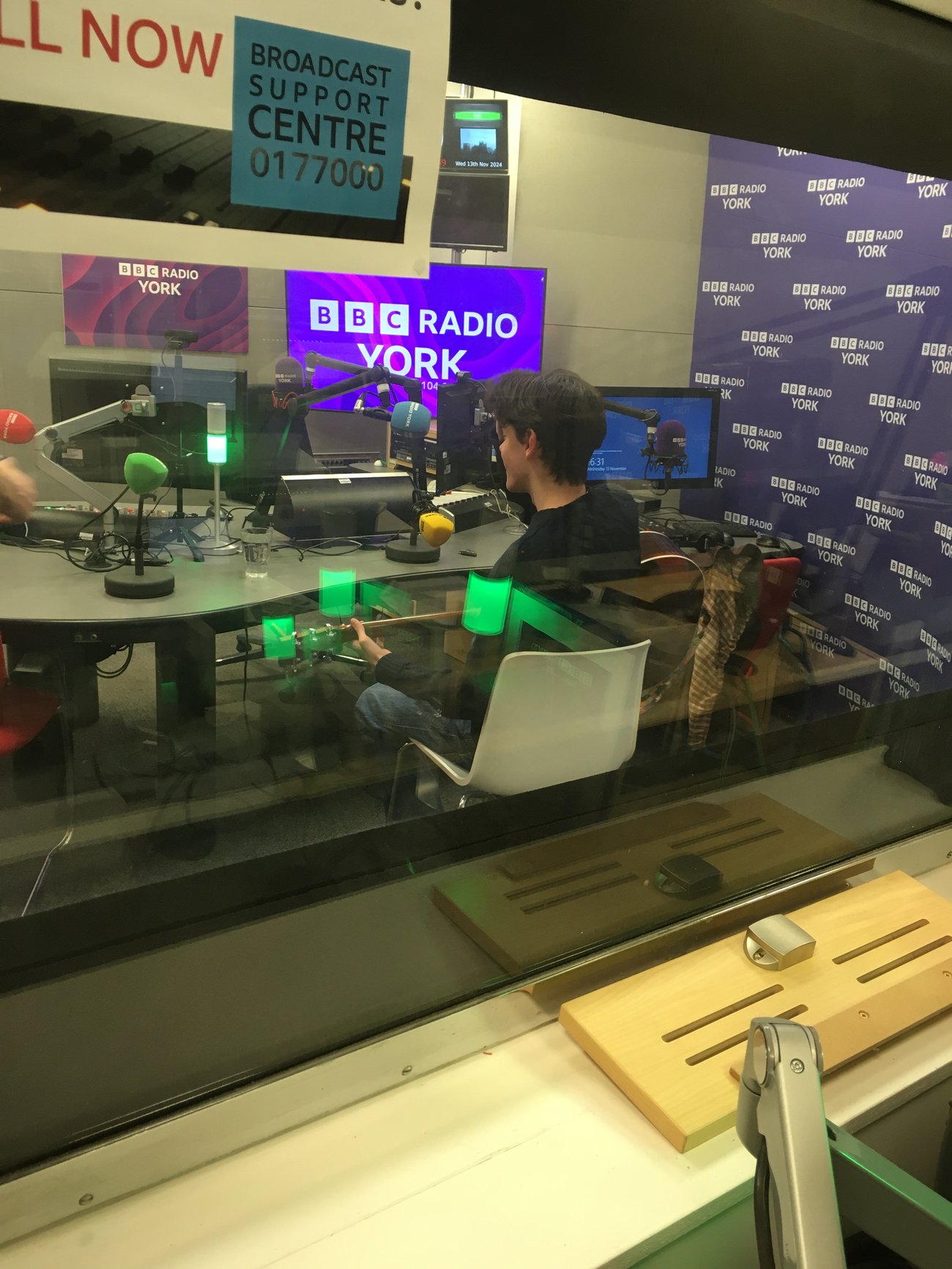
Well, this was all a bit out of the blue...Having received an email in the morning, I picked up my guitar and headed down to the BBC Radio York studio for a live recording session and an impromptu interview with Jericho Keys. Lovely times.
I played a couple of songs, Skomer and Cannonball. You can listen to the full interview and session here...
Interview
JK: But now it's time for this. Introducing featured artists. Yeah, it's our time for our first session of the night. Slow Days is singing us some songs after nine o'clock. But right now, Ned Swarbrick joins us from our York studios. We'll have a natter to him in a minute. But first, let's have a tune on the old acoustic guitar.
JK: Ned Swarbrick on BBC Music Introducing. Kicking off his debut session with us tonight with Skomer which is from his Michelangelo EP. I'm absolutely delighted to say he joins me in the studio this evening. Good evening.
NS: Hello Jericho
JK: Where should we start then? Should we talk about that particular song, Skomer, because I don't know anything about Skomer and you told me it's a place in Wales. And I said, well have you been to Wales? Has a recent trip influenced this particular song and you said, hold your horses I'll tell you all about it in a second. The floor is yours...
NS: Well who's more of an expert to talk about Skomer than someone who's never been there. Well, it comes from a story. I'm not sure how true the story is, but my grandad told me. I think one of his relatives used to be a gamekeeper on the island, it's a little island in Wales and his wife had to row all the way over, nine months pregnant, to the mainland to have the baby and then row all the way back in the same night. So, I'll leave it up to the audience to decide if that's true or not.
JK: It's also a national nature reserve as well.
NS: Fun fact!
JK: That's what Wikipedia just told me when you were playing the song. I thought, I'm not having him get one over on me. So from the Michelangelo EP, we've played a few songs off it on the show already and that's what made me want to get you in tonight. Tell me a little bit about the Michelangelo EP, because I believe it was recorded at the Uni of York.
NS: Yeah, absolutely. It was released on the 18th of last month, October, and we've had a great time with it really.
JK: How did you get working with those people then? I know you called in a couple of your mates as well, tell me about the producer as well, how did all that come about?
NS: Yeah, so we produced it all with a lovely woman called Sherry and she was doing a sound engineering course there, which means it was a win-win for both of us, she got someone to record and we got free recording time. Yeah it was great. We've been in a few times, The Corsairs recorded Blues and the Brown, which was played previously on BBC Introducing. We had a great time, we get on really well and it's led to some great opportunities.

BBC Music Introducing - York and Humberside
JK: Yeah, it really has, which we'll speak about in a second. You mentioned your band The Corsairs. I was going to leave that towards the end of the interview, but you're doing really well on your own at the moment, you've had some great gigs with The Corsairs in the past, are you balancing both together or is this solo project taking more importance now?
NS: Well I've been quite busy at the moment, yeah. But that's not to say that The Corsairs are done just on the back burner for the moment.
JK: Why did you want to do something on your own then Ned? What do you get from doing things solo, because the sound is completely different as well, because The Corsairs, you might tell me I'm on the completely wrong path here, Kooks-esque, really early Arctic Monkeys and now listening to you on your own thinking like Nick Drake.
NS: Yeah absolutely, Nick Drake. I went to go see my mum's absolutely favourite band of all time Belle and Sebastian right. So we went to go see Belle and Sebastian last year, we liked them so much that, well I mean I've been listening to them, it's very nostalgic for me, but yeah we knew we'd love it. And we liked it so much that we went and saw them four days later again at another gig. So, yeah I think that was a real turning point for me in changing my style and I didn't want to lead The Corsairs too far in that direction so I thought I'd go do it myself.
JK: I imagine you're getting a lot of support from the band anyway. What do you get as a performer then doing things on your tod on stage, you know supporting Bernard Butler, which I was going to leave towards the end, but that is absolutely incredible, of Suede fame. What do you get from it differently, then, doing it on your own? I know normally when you're on stage with your mates and The Corsairs, you've got a bit of backing there. When you're on stage on your own, just you and an acoustic guitar.
NS: Yeah, it does feel like it's all on me a bit. It is a bit nerve-wracking sometimes, but, you know, you've just got to power through it. I ended up at the Bernard Butler gig making jokes about Alan Partridge, and they all seemed to like that, yeah.
JK: How did that come about, then? How did you get support? Because I remember you sending me the email saying, oh, just so you know, I'm supporting Bernard Butler. I was like, I've seen. I've seen. It's incredible.
NS: Yeah, I didn't stay quiet about it.
JK: No, why would you? No. How did that come about?
NS: So, a friend of mine has another friend.
JK: Always a friend of a friend.
NS: Yeah, he's a friend of a friend. But a friend of a friend handed over some of my tracks to Bernard. He's been working with him recently on some of his promotion he's been doing. So he handed over some of my songs, and then, yeah, Bernard got back to me saying, yeah, this is brilliant. Would you like to come and support us in Leeds. And I was like, absolutely, yeah.
JK: That is mad, you know, because a lot of people get support slots through the promoter. You know, the band will come into town, the promoter will get local support slots to compliment and try and shift some tickets. But Bernard Butler has actually listened to your record himself and goes, I want this lad supporting me. That is a big deal.
NS: It's still crazy to think about, yeah.
JK: What was that night like?
NS: It was actually in the daytime. Wait, when I was playing. With Bernard Butler, yeah. It's great. He's such a lovely guy. He's so nice, so easy to get on with, and so down to earth, which I think really helps. Yeah, put me at ease.
JK: Any words of wisdom?
NS: Get on with it. He did tell me to always keep you on your rider. You've always got to have crisps, and he did have crisps. He had Tyrell's crisps.
JK: You know, he hasn't lasted this long in the game without knowing that that's what you need to do to succeed.
NS: Yeah. I think that might be the key to his success.
JK: Me too. Forget about his guitar skills and songwriting. Just a good crisp eater. This is Ned Swarbrick on BBC Music Introducing, if you have just joined us. So, Michelangelo, the EP, that's been out doing the rounds now for a month. Have you scratched that solo itch now, and are you going to get back with The Corsairs and write music? Are you already thinking about the next Ned release?
NS: To be honest, I'm not sure. I'm having such a good time. It's not always just me by myself. I've been roping in some of my friends. Yeah. I think over the last year, maybe since February, I've had four or five different line ups of people I've played with at gigs. And, yeah, it's been such a good experience to try and sort of orchestrate different people into doing different things. So, I don't know what the future holds, but I'm looking forward to it.

BBC Music Introducing - Ned Swarbrick & Jericho Keys
JK: Yeah, fantastic. How do you manage to rope in, as you said, different people from the music scene? Are they all your mates and so forth, or do you just go to Fulford Arms and say, oh, they're quite good on the cello. I'll tap them up at the end of the gig.
NS: A lot of the time, it is more friend of a friend. It always seems to be. But, no, Matthew, who was the drummer in The Corsairs, he's a member of the National Youth Folk Ensemble. So, he goes around and plays with a lot of other folk musicians. So, that's how we managed to get a fiddle and a flute player. And they played on Emperor's New Clothes, the live version, which is the last track on the EP.
JK: Does the EP have a theme, by the way? Because when you came in, I said, oh, Michelangelo, EP, love it. And I said, I don't suppose you're doing English Literature at college, are you? And you are, are you?
NS: I am, yeah.
JK: So, what you're reading and what you're learning about, has that had a heavy effect on the way that you've been writing lyrics recently?
NS: Yeah, well, I think inadvertently. I don't really realise until after I've written it. Usually, I'll write something down just to fill the gaps. But then, if you look back at it, I think maybe there was something going on, which I was writing about.
JK: Are you one of those songwriters, who constantly makes notes on your phone, or if you're reading a particular text, underlining it and thinking, I'll nick that line?
NS: Always. I mean, you've just seen me whip out my notes app to find my lyrics, yeah. It always comes in handy to just pinch and steal things from other people.
JK: Borrowing. You're a magpie. You're a magpie. You know, as a songwriter as well, how do you work best? Is it sort of been in your bedroom with complete silence, or do you get the inspiration for, I don't know, maybe you're at gigs and you'll hear a melody and you think, actually. I could do something else with what they've wasted?
NS: To be honest, it's a bit of both. I've always started out as just being in my bedroom, no one else in the house usually, and I'll just sit there with a guitar and try and write something down. But I've learned that if nothing comes to you, nothing comes to you, and you've just got to carry on trying. So, yeah, I'll be out and about and then just walking down the street and I'll sing a melody and record that in my voice notes, yeah. Music is everywhere.
JK: So that's what you're doing. If I see you walking around town, talking to your phone, you're not having a conversation with a friend, you're singing a melody.
NS: No, always singing a melody.
JS: Fantastic. Right, Ned, it's been such a pleasure having you on the show. Before you go, though, people can catch you live. Tell us about the show that you've got coming up at the Fully Arms.
NS: On the 28th of November, I'll be playing with Gravy. They're a great band from Leeds. Um, yeah, I can't wait.
JK: What else in the pipeline that you can tell us about? Any other gigs that you've got coming up?
NS: I haven't got much else going on, really.
JK: You know what the official line is? Watch this space.
NS: Watch this space. Yeah. Well, I don't have to tell you to do that. You know, you know to do that already, don't you?
JK: Yeah, I do. But they can come and see you at the Fulford Arms, 28th of this month, supporting Gravy. What can you tell me about this final tune that you're going to play me tonight, then, Ned?
NS: This last tune is called Cannonball. And I was trying to think of something to say about it when I was walking over with my dad, and he was saying, I think it's your answer to Lightning Bolt by Jake Bugg, which I think is high praise. I'll take that. He was always one of my biggest inspirations. His first CD was Jake Bugg's... first album in 2012. And that was quite some time ago. Yeah. So, take that, as you will. I think, yeah, it's more upbeat than the last one, Skomer. But not to say that it's any less meaningful.
JK: Awesome. Right. Well, this is Ned Swarbrick's very own Lightning Bolt on BBC Music Introducing this is Cannonball. Take it away, mate.
Great to see and have Ned on BBC Music Introducing, make sure you catch him live.
BBC Music Introducing

More stuff...

Mondo Bizarre
Many thanks to the Raquel at Mondo Bizarre Magazine for featuring my music in her magazine and radio show.
Great American Folk Show
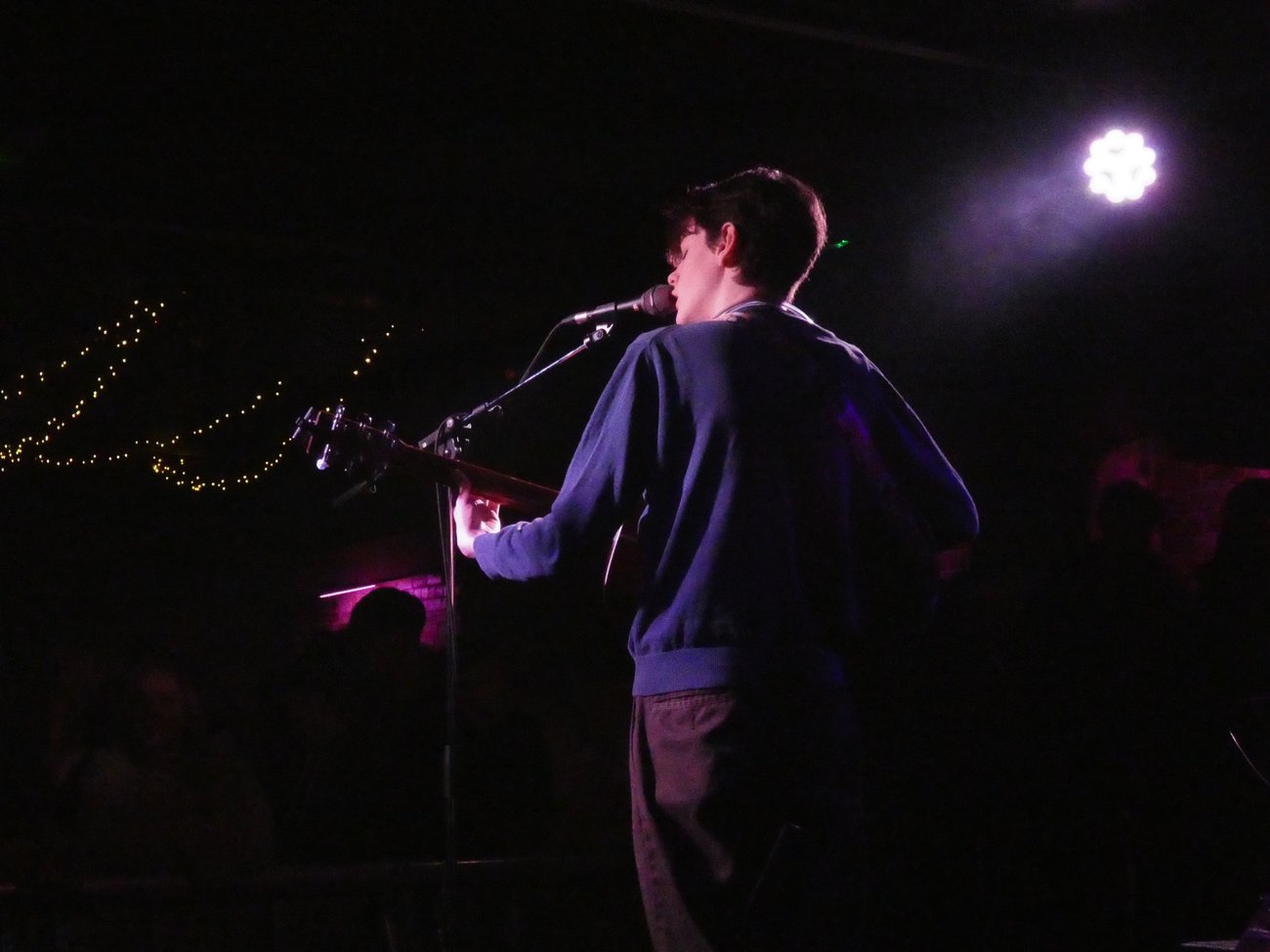
Amazing to be featured on Tom Brosseau's 5th anniversary Great American Folk Show coming all the way from Fargo, North Dakota.
Abbey Road
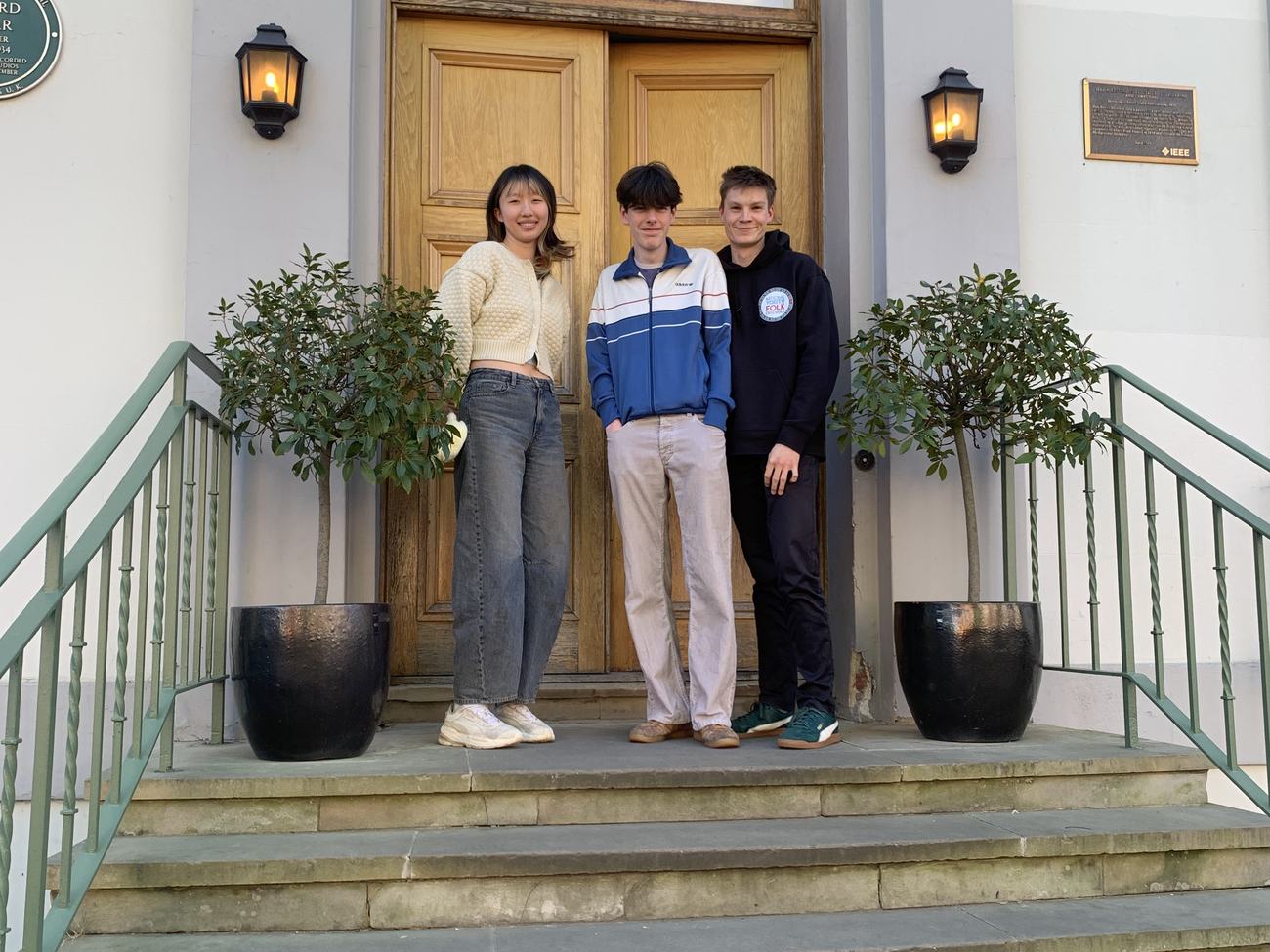
Back in April 2025 I visited Abbey Road Studios to see my super-talented audio engineering friend Sherry Yeh.
Mondo Bizarre
Many thanks to the Raquel at Mondo Bizarre Magazine for featuring my music in her magazine and radio show.
Great American Folk Show
Amazing to be featured on Tom Brosseau's 5th anniversary Great American Folk Show coming all the way from Fargo, North Dakota.
Abbey Road
Back in April 2025 I visited Abbey Road Studios to see my super-talented audio engineering friend Sherry Yeh.